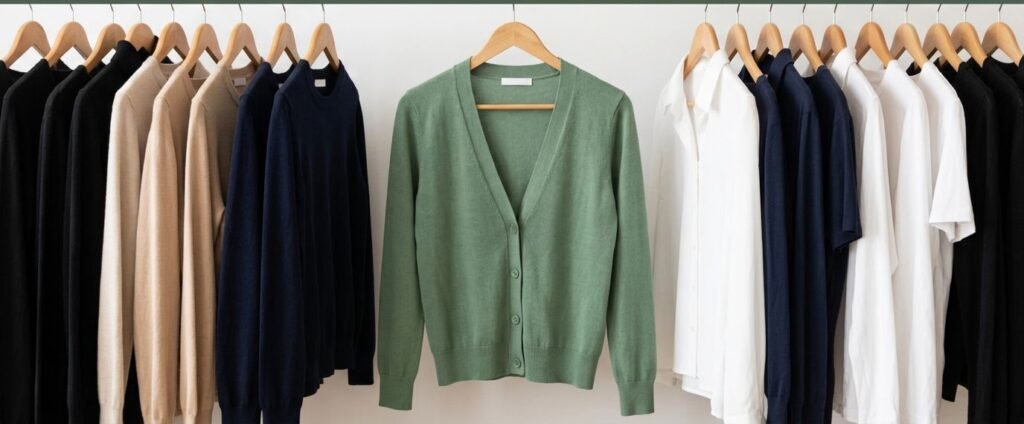
A minimalist wardrobe full of neutral tones like black, beige, navy, and white can feel easy until it starts to feel flat. If bright clothing has always seemed too loud, too risky, or too unlike you, that doesn’t mean color isn’t for you.
The trick is to stop treating color like a costume change. Wearing color works best when it grows out of the clothes you already love, and that’s where the shift starts.
Key Takeaways
- Start small by adding just one colored piece—like a muted sage cardigan or rust scarf—to your familiar neutral outfits, keeping the silhouette and fit the same for easy confidence.
- Choose flattering shades based on your skin tone: try dusty blues and berries if silver jewelry suits you, or olives and terracottas if gold does, prioritizing colors you’ll actually wear repeatedly.
- Use color strategically by occasion—muted mustard for work, olive joggers for weekends, or lilac knits for events—pairing with neutrals to keep looks polished and grounded.
- Color boosts mood and personal style when it feels like you; repeat comfortable combinations to make it your signature, drawing on color psychology for emotional lift without overhauling your wardrobe.
Start with one piece, not a whole new wardrobe
If you’ve lived in neutrals for years, a head-to-toe colorful outfit can feel like too much. That’s normal. Most people build confidence faster when they add one colored item to familiar wardrobe essentials.
Start where the stakes are low. A soft green cardigan over a white tee still feels calm. A rust scarf with a camel coat adds warmth without turning your whole attire upside down. Even a bag, shoe, or knit with a pop of red can wake up beige, gray, or black.
Muted tones are a great bridge. Try sage instead of emerald, dusty rose instead of hot pink, or soft mustard instead of neon yellow. These colors still read as colorful, but they blend more easily with neutral clothing.
What matters most is contrast. Keep the outfit’s shape and fit familiar, then change only the color. If you love straight-leg trousers, wear the same cut in olive. If your go-to layer is a cardigan, try one in terracotta. The comfort comes from the silhouette, so the color doesn’t have to do all the work.
If color feels intimidating, keep the outfit structure the same and change only one element.
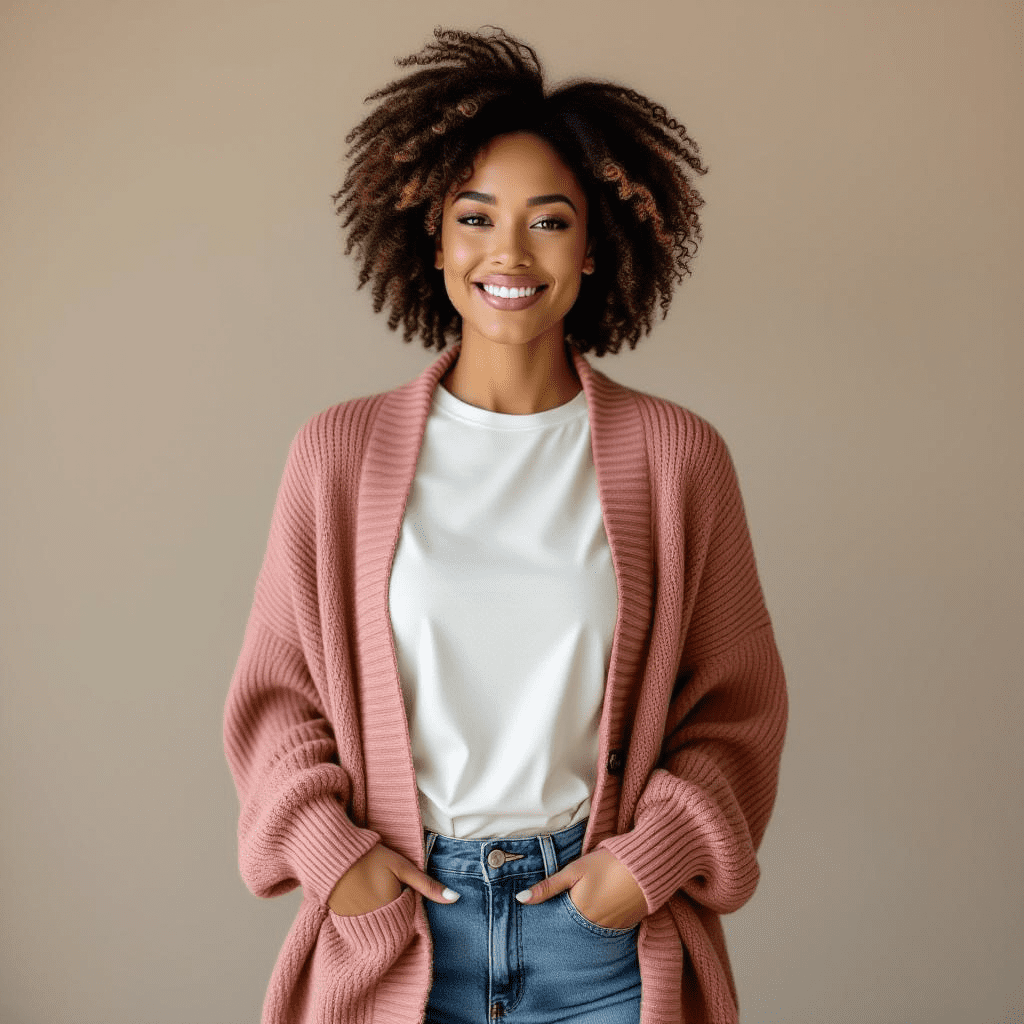
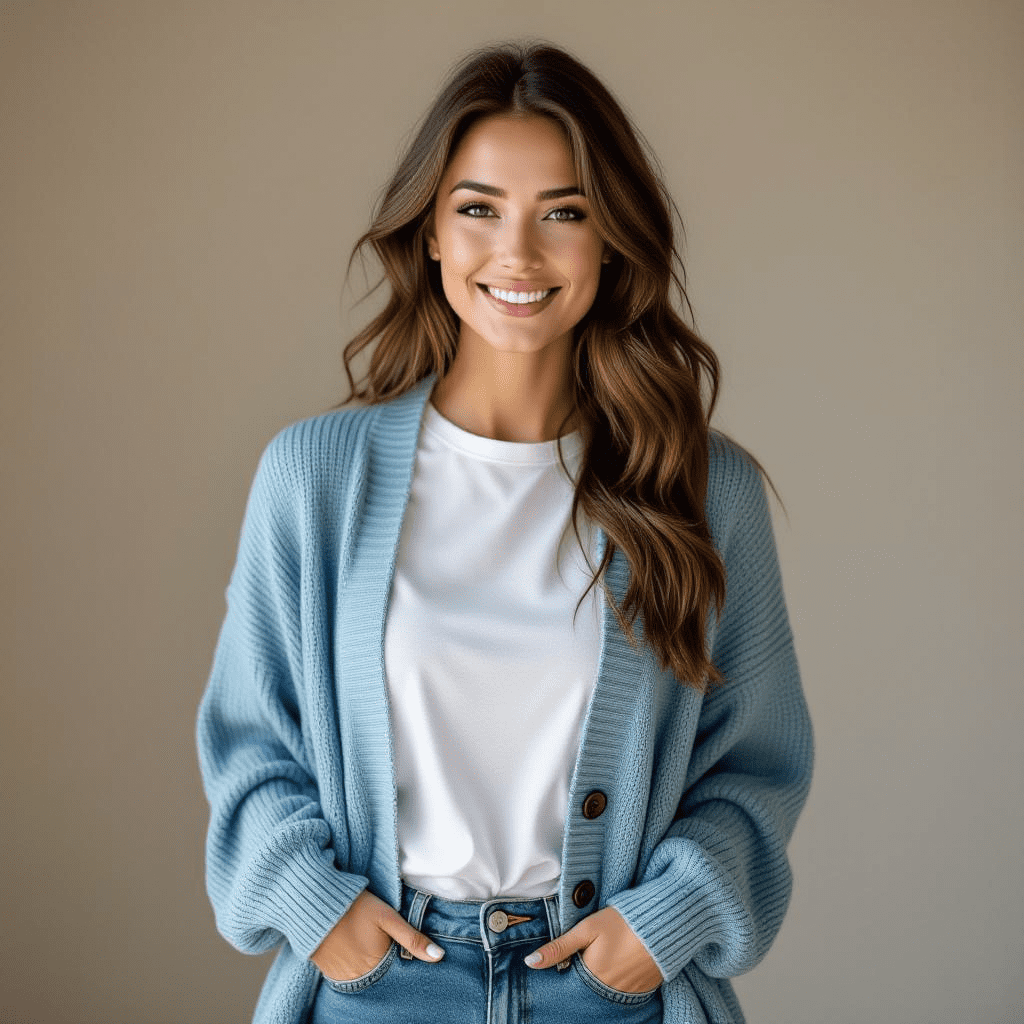
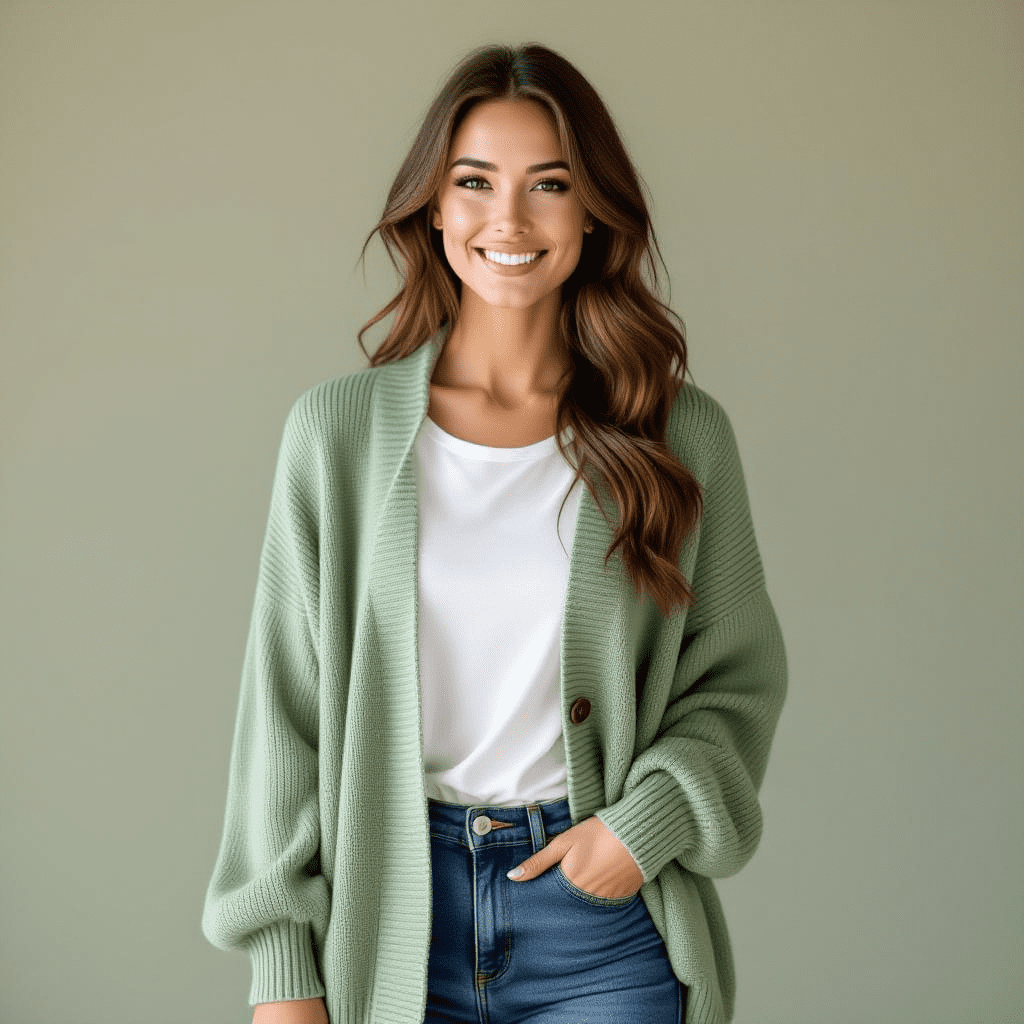
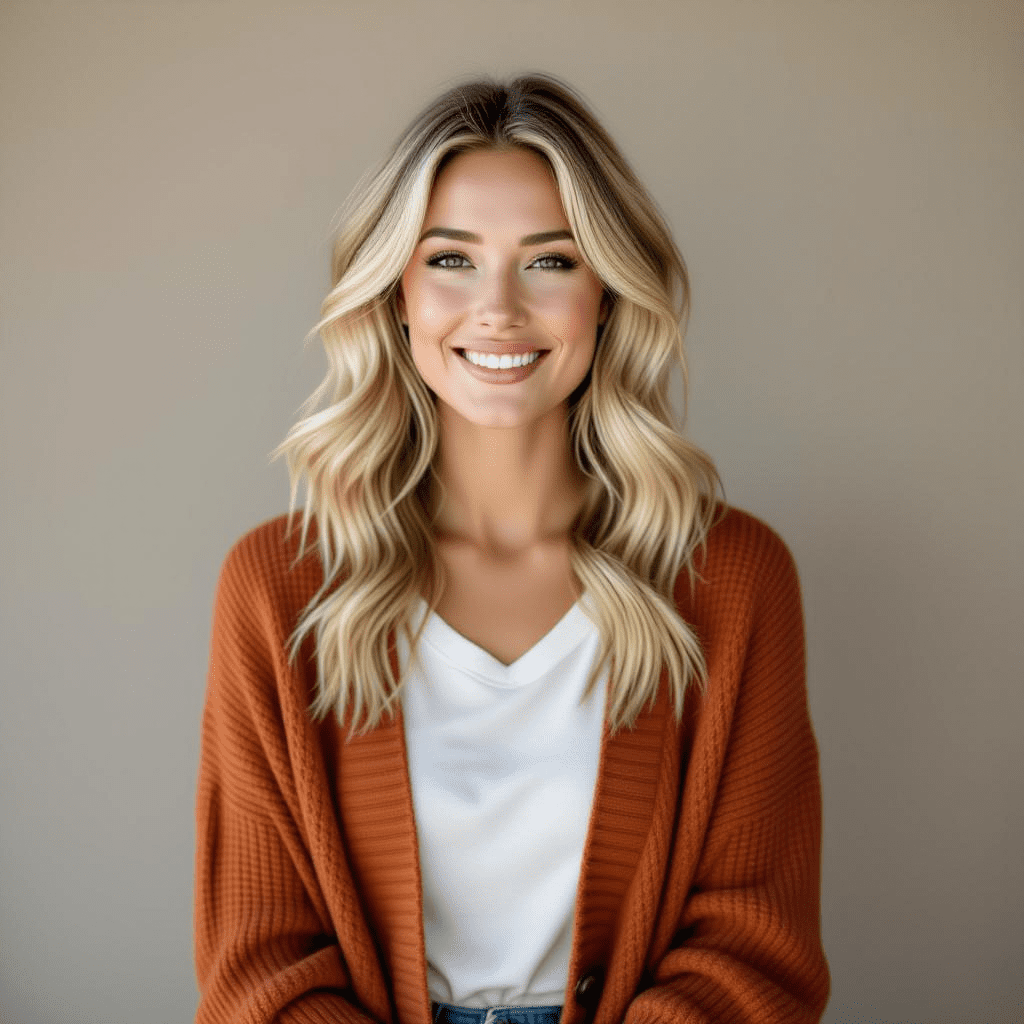
These images were created by AI to support the text. Links to similar clothes can be found below.
You don’t need to rush into vibrant colors to “do it right.” A single statement piece counts. One colored sweater, one printed scarf, or one handbag in cobalt can shift the whole look. That’s still dressing with confidence, because confidence grows through repetition, not pressure.
Choose colors that flatter you and still feel like you
Color advice often gets too strict. You don’t need a full color analysis to get started. Still, it helps to note two things: your skin tone and your comfort level with your style.
If silver jewelry looks better on you, cooler shades may feel easier to wear. If gold jewelry, cream, and camel light up your face, warmer shades may suit you faster. If both work, you have plenty of room to play. This simple check offers a glimpse into seasonal color analysis.
This quick guide can help you pick a first color palette based on common color seasons.
| What usually flatters you | Easy colors to try first |
|---|---|
| Silver jewelry, crisp white, cool gray | Dusty blue, lavender, berry, blue-red |
| Gold jewelry, cream, camel, warm beige | Olive, coral, terracotta, warm teal |
| A mix of both, soft neutrals | Sage, muted turquoise, rose, soft mustard |
The best starting shade is the one you’ll wear twice this week, not the one that looks bold on a hanger. These choices become your signature colors and strengthen your personal branding. So if your style is clean and minimal, stick with toned-down colors in simple cuts. If you already like patterned tops or playful accessories, you might enjoy a brighter step.
Skin tone matters, but your mood matters too. Some people look great in orange and still hate wearing it. Others feel amazing in green because it makes their eyes stand out or adds more life to their face. Personal style has to be part of the choice, or the clothing will sit in the closet.
Pay attention to where you want the color. Tops bring color close to your face, so they’re more noticeable. Pants, shoes, and bags feel lower-pressure. If you’re unsure, start away from the face and build up later.
Easy Outfit Ideas for Real Life
Once you have one or two colors in mind, put them into outfits you already wear. This keeps the change realistic, and it helps new pieces earn their place in your wardrobe.
If you usually wear black trousers and a white shirt, add a cardigan in forest green, plum, or muted mustard. A navy blazer also pairs well with a deep red blouse, as complementary shades on the color wheel create a balanced look. These combinations feel grown-up and timeless, so they don’t read as trend-chasing while nodding to color trends.
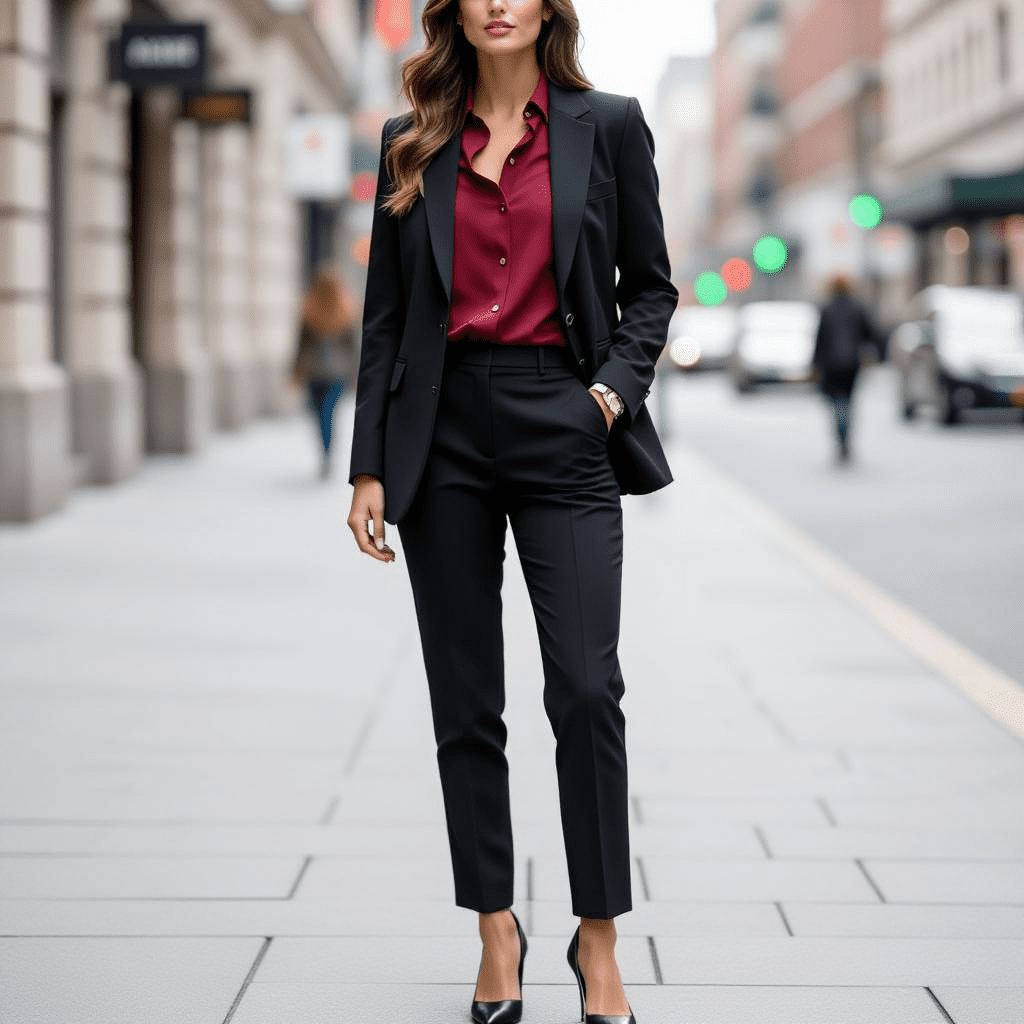
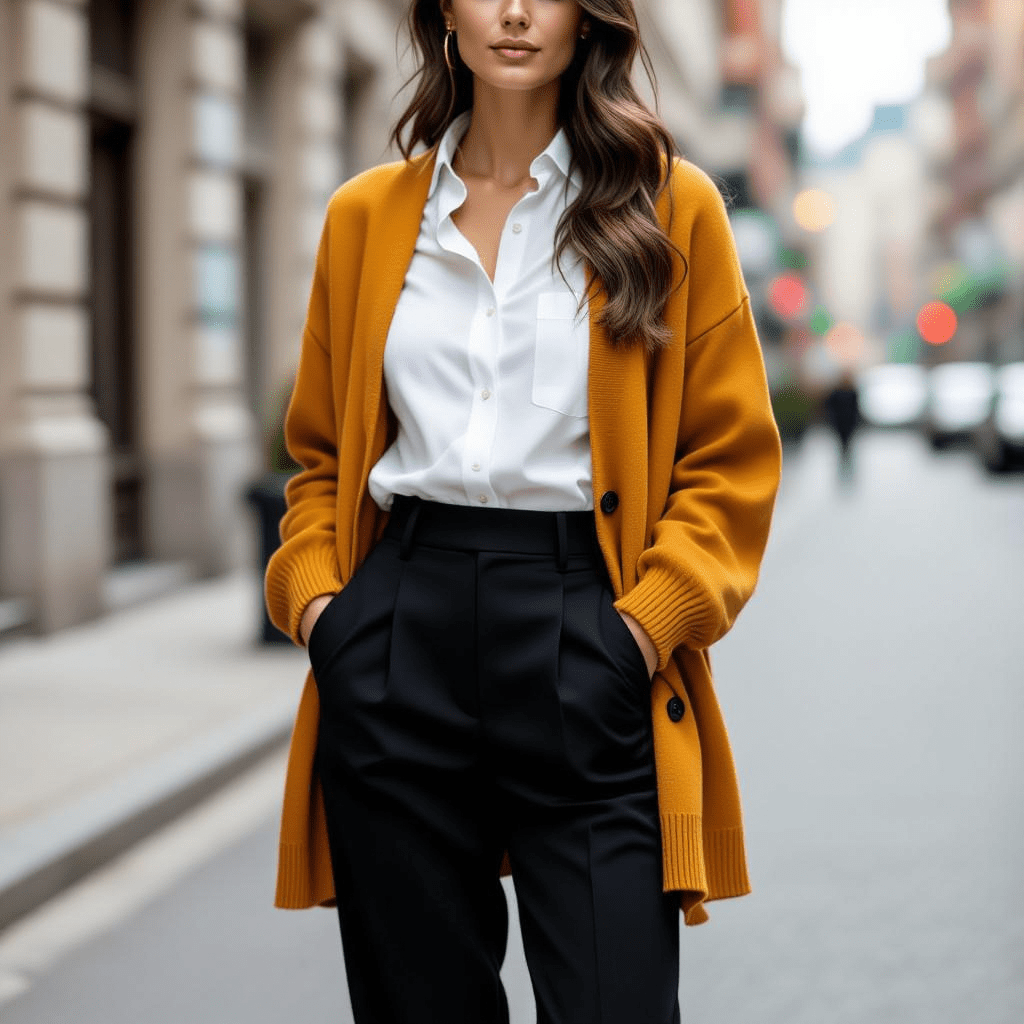
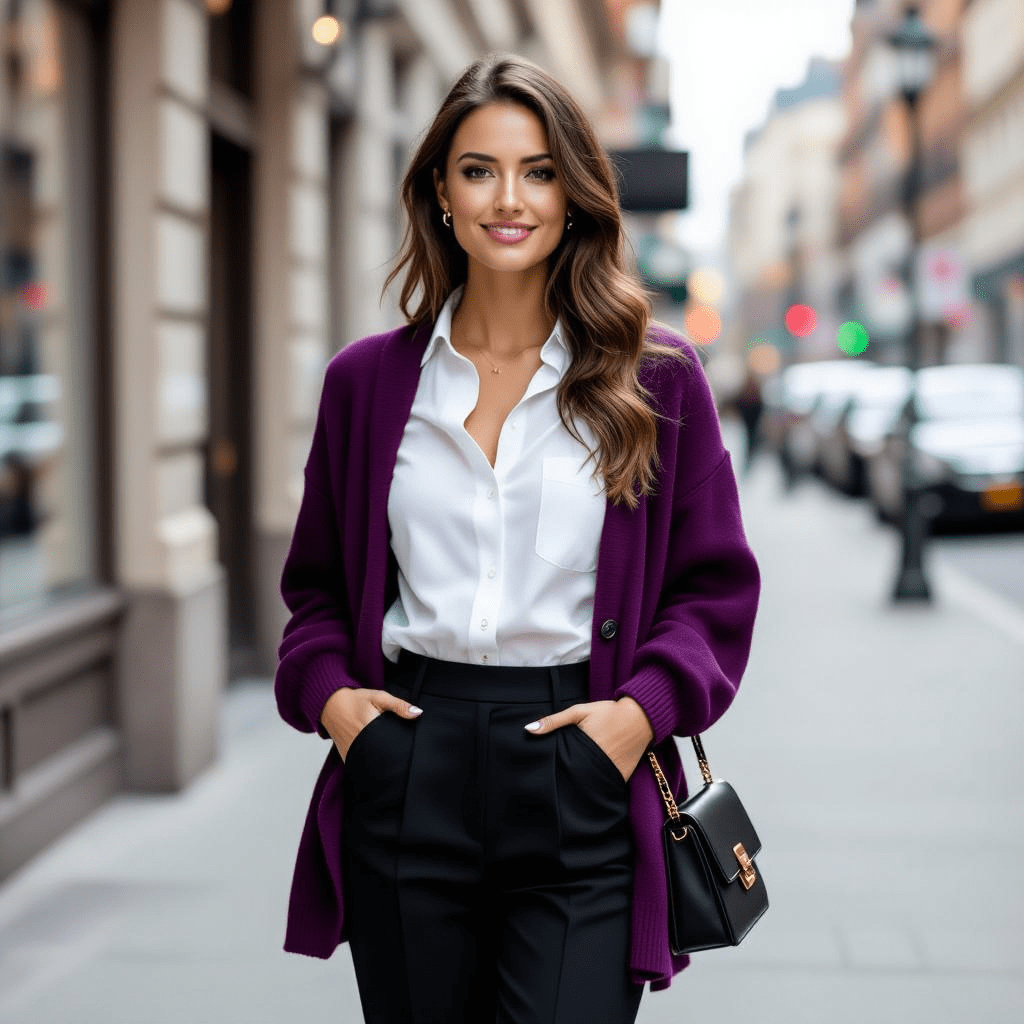
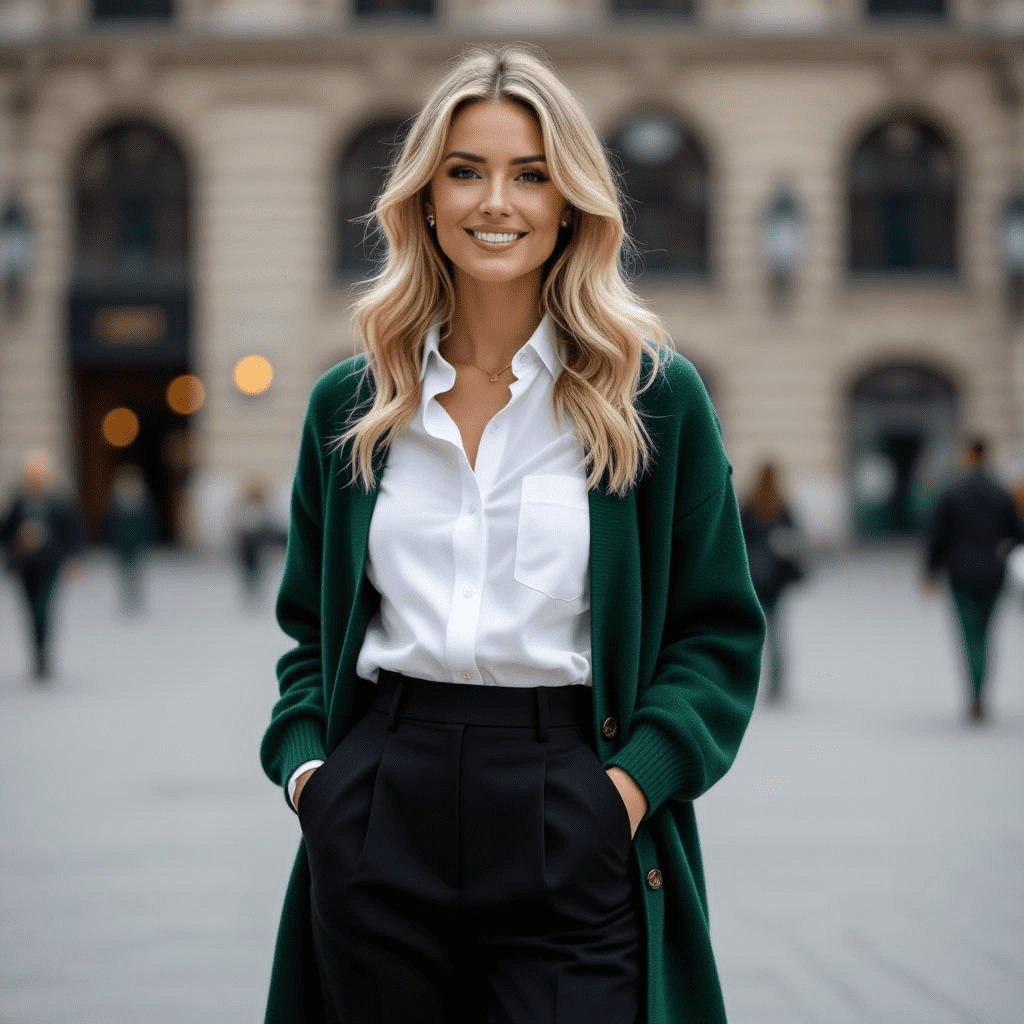
These images were created by AI to support the text. Links to similar clothes can be found below.
You can also use color in smaller doses. Try burgundy flats with gray tailoring, or a teal silk scarf with a cream blouse. When the rest of the outfit stays quiet, the colored piece looks intentional and aligns with spring color trends.
For errands, weekends, and casual plans
Denim makes color easier. Light-wash jeans, a striped tee, and tomato-red sneakers in primary colors feel fresh yet relaxed. An oatmeal sweatshirt with olive joggers offers color without much contrast, a perfect example of tonal dressing or monochrome dressing.
If your style stays simple, swap one neutral layer for a colored one. A beige tank and blue jeans can handle a soft coral overshirt. Meanwhile, a black tee and sneakers look better with a bright bag than many people expect.
For dinners, brunch, and events
Color often works best when the fabric feels a bit dressy. A satin skirt in deep olive, a knit in lilac, or a red clutch with an all-black outfit can make you feel polished fast. You don’t need loud prints or dramatic styling.
For a stronger step, use color blocking by pairing one statement shade with two neutrals. Try a cobalt dress in primary colors with tan sandals and a cream bag, or wide-leg white pants with a saturated color fuchsia top and nude shoes. The neutral pieces keep the outfit grounded, so the color gets room without taking over.
Frequently Asked Questions
What if I’ve worn only neutrals for years and color feels too risky?
Start with one low-stakes piece, like a soft green cardigan over a white tee or a terracotta scarf with camel outerwear. Muted tones bridge the gap nicely, blending with your neutrals while adding subtle life. Confidence builds through repetition, not a full wardrobe swap.
How do I pick colors that actually flatter my skin tone?
Notice which jewelry—silver or gold—makes your face light up, then try matching shades: cool silvers pair with dusty blue or lavender, while warm tones pair with olive or coral. Test with simple pieces close to your face first, but always choose what feels like you over strict rules.
Can I incorporate color into professional or work outfits?
Yes, add a forest green cardigan to black trousers and a white shirt, or burgundy flats with gray tailoring for an intentional pop. Complementary shades like deep red with navy create timeless balance, aligning with trends without seeming trendy.
Where should I put color if I’m just starting out?
Begin away from the face with pants, shoes, bags, or scarves for lower pressure, then move to tops as confidence grows. Tops draw more attention since they’re near your face, so save brighter or bolder hues there for later.
Does color psychology really affect how I feel in my clothes?
Absolutely—shades can boost mood, project confidence, and influence your emotional state, varying by personal and cultural context. Wearing flattering colors that feel natural enhances this effect, turning your style brighter without the risk.
-
 Check It Out$21.99
We earn a commission if you make a purchase, at no additional cost to you.
07/25/2026 06:03 am GMT -
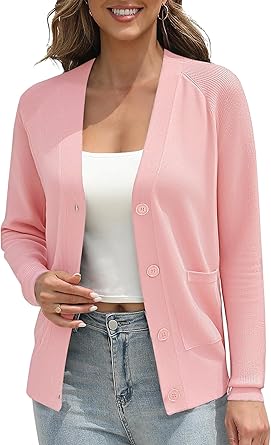 Check It Out$28.86
We earn a commission if you make a purchase, at no additional cost to you.
07/25/2026 10:14 am GMT -
 Check It Out$19.98
We earn a commission if you make a purchase, at no additional cost to you.
07/25/2026 07:21 am GMT -
 Buy Now$21.00
We earn a commission if you make a purchase, at no additional cost to you.
07/25/2026 06:04 am GMT
Conclusion
A neutral wardrobe isn’t a problem. It’s a strong base, and that makes adding color much easier than it seems.
Color psychology and fashion psychology show how your style choices can boost your mood, impact your emotional state, project confidence, and influence behavior. Keep cultural context in mind, since color meanings can vary. Start with one piece, choose shades you enjoy, and repeat the combinations that feel natural. Over time, wearing color stops feeling risky and starts feeling like your own style, only brighter.
This post may contain affiliate links. If you make a purchase through these links, I may earn a small commission at no extra cost to you.