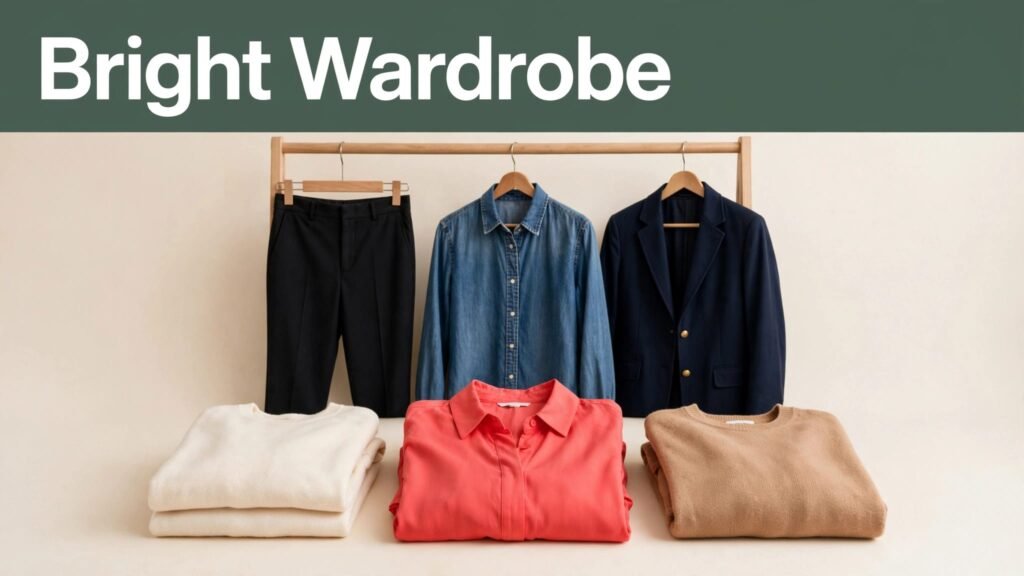
A closet full of basics can make bright shopping feel risky. Yet a bright clothes wardrobe can begin with your starter wardrobe, not a full replacement. Black trousers, denim shirts, cream sweaters, and navy jackets are neutral colors worth keeping.
The most wearable color choices connect to pieces you trust, fit your real life, and feel good against your skin. Build a practical clothing wardrobe from existing pieces, with your starter wardrobe as the foundation. Color doesn’t require a white wardrobe; try vivid coral, warm ivory, clear camel, or warm navy, then repeat what works.
This post may contain affiliate links. If you make a purchase through these links, I may earn a small commission at no extra cost to you.
Key Takeaways
- Build a bright clothes wardrobe from the pieces you already wear, using dependable neutrals as your foundation.
- Use a short closet map and the three-outfit test to spot useful gaps and avoid bright purchases that have no partners.
- Let color analysis guide your choices, but prioritize comfort, personal preference, fit, and the shades that make you feel good.
- Choose two or three foundation colors, then add one clear accent at a time so your wardrobe stays practical and easy to repeat.
- Keep bright garments visible, care for their colors, and build confidence by repeating outfits that work in your real life.
Start With the Clothes You Already Reach For
Before you buy a vivid blouse or bold blazer, treat the clothes you already reach for as your starter wardrobe. Pull out the items you wore in the past month, then notice their colors, shapes, and fabrics.
A bright piece needs partners. If you already own dark jeans, warm ivory trousers, a warm navy skirt, or a clear camel trench, you have several useful starting points.
Make a short closet map
Lay your go-to clothing on the bed or hang it together. Sort it into bottoms, layers, tops, dresses, and accessories. Then ask which categories feel dull or repetitive.
Perhaps you have a mostly white wardrobe, with grey and black tops, while your trousers fit perfectly. A clear turquoise knit or bright warm-pink shirt can change those familiar bottoms without creating a new shopping problem.
Use the first gap you find to guide the next addition to your starter wardrobe.
Also note what you avoid wearing. If a stiff jacket stays untouched, buying the same jacket in orange probably won’t fix the issue. Color should improve the clothes you already enjoy, not persuade you to tolerate a bad fit.
Use the three-outfit test
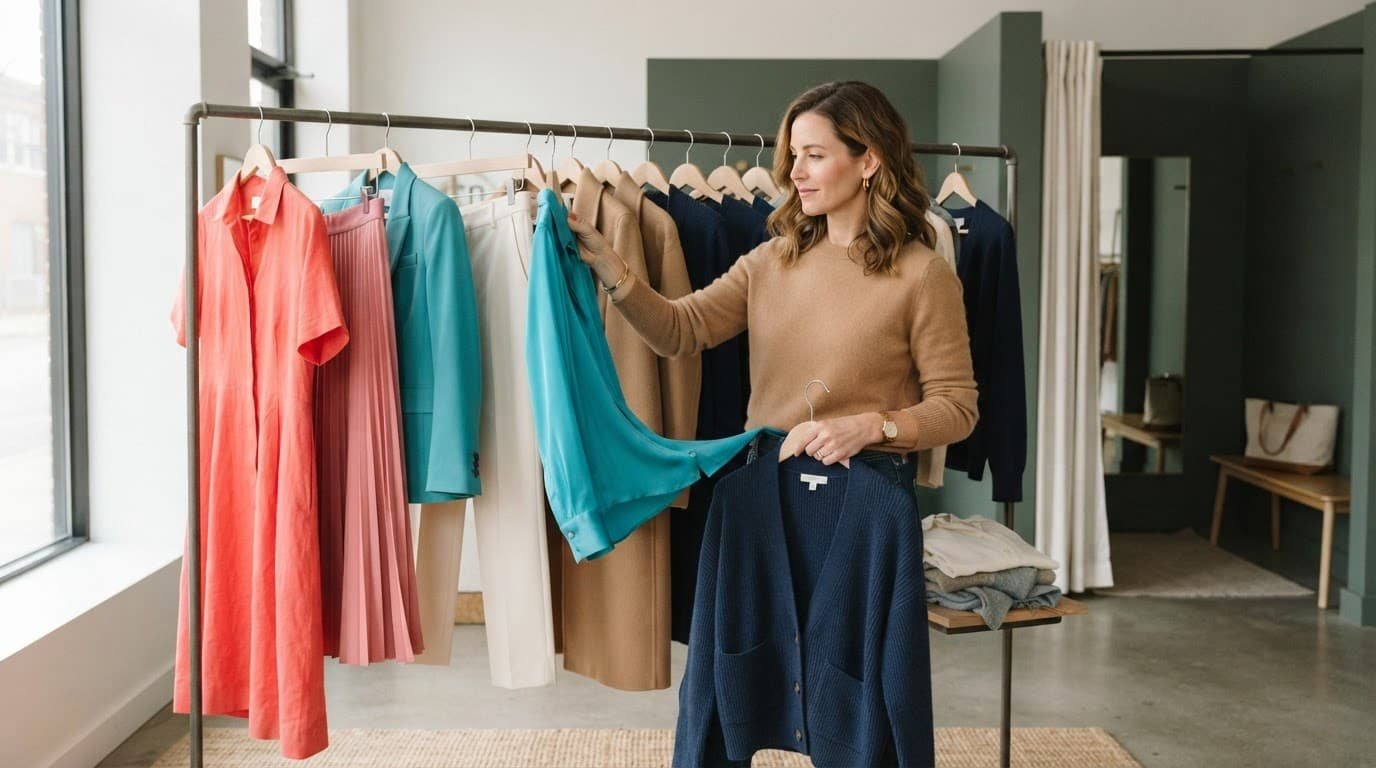
Before keeping a new item, name three outfit combinations you can make with it at home. A vivid coral blouse might work with black trousers for work, light-wash jeans for lunch, and a cream midi skirt for an event.
If you can only picture one occasion, leave it behind for now. A beautiful item with no partners becomes closet decoration.
The easiest bright purchase is usually a color you can wear with two existing bottoms and one familiar layer.
Let Color Analysis Guide, Not Control, Your Choices
Color analysis can give useful language to something you may already sense. You might notice that certain shades make your face look rested, while others make you feel washed out.
Seasonal systems consider three color dimensions: temperature, depth, and clarity. This seasonal color analysis overview explains the familiar Spring, Summer, Autumn, and Winter framework. Still, an autumn season label, or any other seasonal result, shouldn’t dictate every purchase.
Recognize the Bright Spring direction
Bright Spring colors are warm, clear, and highly saturated. A bright spring color palette often includes vivid coral, clear turquoise, bright warm pink, sunny yellow, grass green, and warm red.
These shades tend to look fresh rather than smoky. They have more visual energy than dusty rose, muted sage, mauve, or soft mushroom brown.
Bright Spring sits near Bright Winter and True Spring in many systems. Bright Winter is usually cooler and sharper, while True Spring tends to be warmer with less contrast. Comparing a similar shade with True Spring can clarify which direction suits you. These True Spring boundaries can help when you compare two similar garments in a fitting room.
Test color near your face
Hold a garment below your chin in daylight. If you’re building a starter wardrobe, test only two or three shades at first. Compare each with a more muted or cooler version. Look at your under-eye area, complexion, and the overall balance of your features.
Warm shades often carry yellow or golden undertones and may echo warm undertones in your complexion. Cool shades often carry blue undertones, as this guide to seasonal color characteristics describes. Use that distinction as a clue, not a rulebook, and add the shades you enjoy to your starter wardrobe before expanding the range.
If cobalt blue makes you happy and you wear it often, it belongs in your wardrobe. Personal style works best when comfort and preference come first.
How to Build a Bright Clothes Wardrobe Around Neutrals
A good bright clothes wardrobe has breathing room. Neutral colors give saturated pieces a calm place to land, so an outfit looks intentional rather than overly busy.
For bright spring coloring, warm ivory, clear camel, light warm grey, and warm navy often work better than stark black or cool charcoal. However, the best neutral is the one you already own and will wear regularly.
Even if you don’t identify with true spring, a capsule wardrobe can still use this neutral strategy. True spring can guide your choices, but it doesn’t have to control them. You can layer brights into a white wardrobe without rebuilding it.
Choose two or three foundation colors
Pick two or three foundation colors for a starter wardrobe before you add several bright items. This keeps your shopping focused and makes outfit combinations easier to see.
For a small starter wardrobe, keep a limited color palette of foundation and accent shades. Use the table to compare practical neutral pairings and spot gaps in your current closet.
| Neutral | Works well with | Useful pieces |
|---|---|---|
| Warm ivory | Coral, turquoise, tomato red | Tees, trousers, knitwear |
| Clear camel | Warm pink, green, yellow | Blazers, belts, loafers |
| Warm navy | Coral, bright blue, ivory | Pants, skirts, jackets |
| Light warm grey | Turquoise, vivid pink, orange | Cardigans, casual pants |
These shades don’t need to match perfectly, but they should look calm beside brights and suit your routines. Warm ivory can soften bright tops, while clear camel structures layers. Warm navy can ground skirts, and light warm grey keeps casual outfits relaxed.
Buy one clear accent at a time
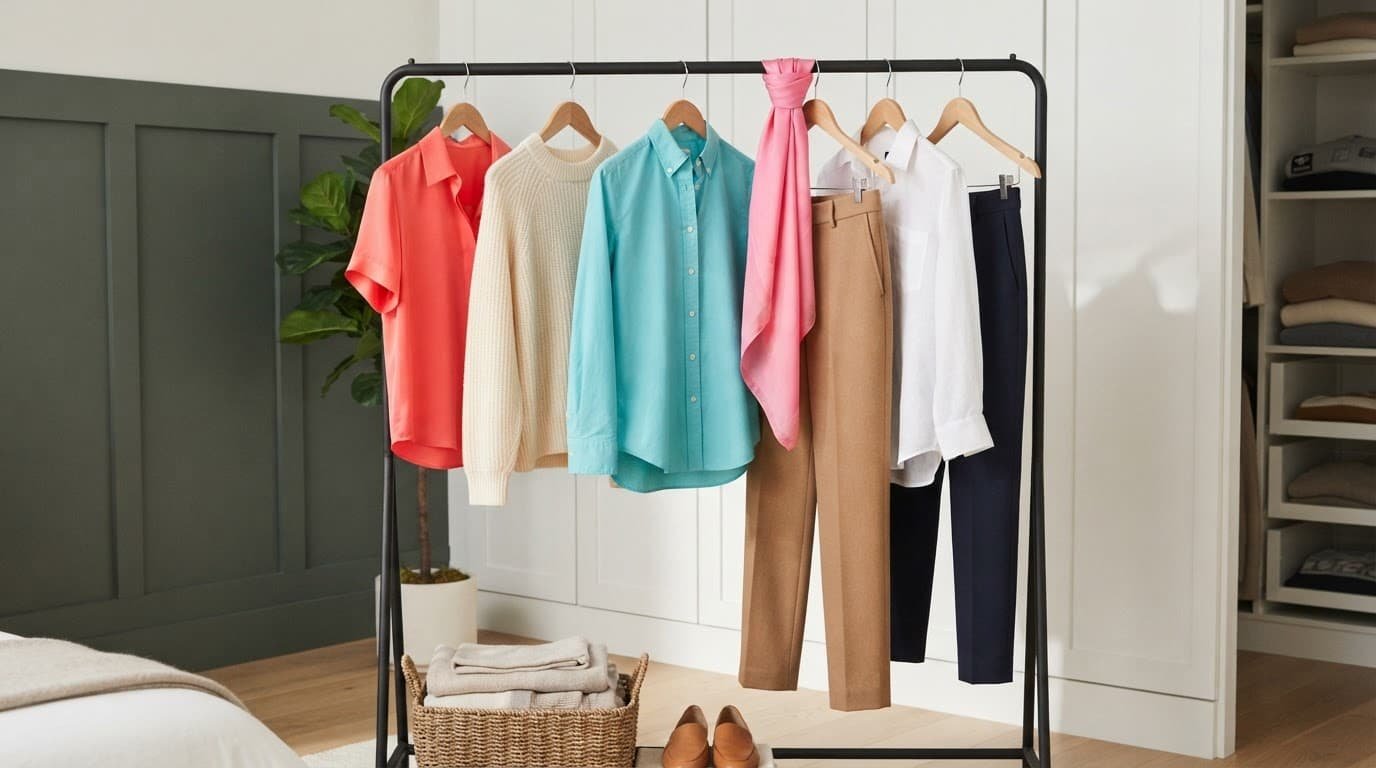
Start with one color family that makes you feel alert and at ease. A vivid coral top is often less intimidating than a coral suit. A clear turquoise bag can introduce color without changing your usual silhouette.
Then wear that piece several times before buying another. You may find that vivid coral works better than yellow, or that warm pink suits your wardrobe better. Green may feel more natural in accessories.
A colorful starter wardrobe becomes useful through repetition. The goal isn’t to own every bright shade. It’s to own colors that show up in your week.
Shop for Pieces That Do More Than Look Good
Stores often style bright clothing with equally bold items, which can hide whether a garment works with your life. Bring a photo album of favorite outfits when you shop, or wear the jeans and shoes you use most. A sensible first purchase for a starter wardrobe should work in a capsule wardrobe. Leave behind impulse purchases that only work in the store display.
Prioritize shape, fabric, and comfort
Try the same checks you would use for any clothing purchase. The shoulder seams should sit in the right place. Buttons should lie flat. You should be able to sit, reach, and move without pulling or tugging.
Fabric affects how a color reads and feels. Breathable natural fibers, such as cotton, linen, and merino, can also make a bright piece easier to wear. Crisp cotton poplin keeps a bright shirt polished, while fine merino makes a saturated sweater feel refined. Matte linen makes orange or red more relaxed, while satin turns the same color into evening attire.
A bright item doesn’t have to be loud. A tailored warm navy blazer with a coral lining can anchor a professional capsule, while a clear camel jacket supports several bright garments. A simple pink tee under either layer can feel just as expressive.
Check the fitting room from a distance
Step back several feet from the mirror. If your eyes go to the garment before your face, try a different shade, neckline, or proportion. A true spring label matters less than fit, comfort, and whether you’ll actually wear the piece.
Also take one photo in natural light if the store allows it. Store lighting can make colors look flatter than they do outdoors. A picture makes it easier to compare two shades without relying on a rushed first impression.
Price matters, too. Spend more on pieces with a long wear season, such as a jacket, trousers, or well-made bag, and repeat accessories like polished gold earrings. They can anchor a starter wardrobe. Save lower-cost experiments for a bright scarf, nail color, or casual top.
Style Bright Colors With Enough Contrast
Color contrast is the difference between shades within one outfit. Bright Spring coloring often handles clear contrast well, especially when the colors share warmth and clarity.
You can create a polished look without wearing head-to-toe brights. Let vibrant colors lead in one area of your starter wardrobe, while neutrals support the rest.
Place your strongest color where it helps most
A bright top, scarf, or statement earring brings color near your face. Pair it with neutral trousers for an easy work outfit. For a dress, add warm navy shoes or a clear camel bag to add structure.
Try these pairings when you need a starting point:
- A vivid coral blouse with warm navy wide-leg pants and polished gold hoops feels sharp for a meeting.
- Clear turquoise with warm ivory denim looks fresh and casual.
- Bright warm pink with camel trousers offers contrast without feeling cold.
- A tomato-red dress with tan sandals works when you want color with little styling effort.
Repeat the formula with a vivid coral accessory, warm ivory trousers, or warm navy flats. In a white wardrobe, place a saturated accessory or top against white basics for instant focus. Together, these formulas make a starter wardrobe easier to repeat.
Choose prints and metals with purpose
Clear, graphic patterns usually suit bright palettes well. Look for medium-scale stripes, dots, color-blocking, or geometric florals with distinct edges. Muddy watercolor prints may compete with the clean effect of a vivid palette.
Jewelry changes the temperature of an outfit. Polished gold often echoes warm undertones and bright color better than oxidized silver or matte metals. A glossy gold earring beside coral or turquoise can make the whole combination look more connected.
Choose polished gold earrings or a simple chain you can repeat across several outfits. Still, wear sentimental silver pieces if you love them. Style has room for the objects that feel like you.
Keep Bright Clothing Visible and Easy to Wear
A bright garment can’t improve your morning if it disappears behind a wall of dark hangers. A starter wardrobe works best when every piece stays visible, especially the ones you want to wear often.
Organize by garment, then by color
Use the closet as simple storage, or choose a freestanding armoire if you don’t have a built-in closet. Store folded knitwear where it won’t stretch, then group shirts with shirts and jackets with jackets first. Within each group, start with clear camel and light warm grey before brighter pieces so you can spot missing partners more easily.
A white wardrobe or light-colored closet interior helps colors stand out in a small room. A white wardrobe interior makes color easier to scan, while mirror doors reflect light. When arranging a white wardrobe, keep bright garments visible with matching slim hangers and avoid overcrowding the mirror doors.
Use mirror doors to check each look before leaving, then keep a simple photo record of pieces you wear again. Outfit tracking can reveal reliable combinations you might otherwise forget.
Protect the shades you chose
Read the care label before the first wash. Turn richly colored items inside out, use cool water when the label permits, and avoid leaving them in direct sun for long periods.
Earth Day’s clothing care toolkit also recommends washing jeans inside out to help limit fading. Wash less often when a garment remains clean, then use a storage solution for prompt hanging or folding after drying.
A vivid piece looks more intentional when its color stays clear. Good care also makes a smaller wardrobe feel more satisfying.
Frequently Asked Questions
How can I start a bright clothes wardrobe without replacing everything?
Begin with the clothes you already reach for and identify the colors, shapes, and categories you rely on most. Add one bright piece that works with at least two existing bottoms and one familiar layer.
Which neutral colors work well with bright clothing?
Warm ivory, clear camel, warm navy, and light warm grey can give vivid colors a calm place to land. The best neutral is still the one you already own and will wear regularly.
Do I need to follow a Bright Spring color palette?
No. Color analysis can help you compare temperature, depth, and clarity, but it should guide rather than control your choices. If you love cobalt blue or another shade and wear it often, it belongs in your wardrobe.
How do I know whether a bright item is worth buying?
Use the three-outfit test and name three combinations you can make with the item at home. Also check the fit, fabric, comfort, and whether the piece suits your real routines, not just how it looks in the store.
How can I make bright clothes easier to wear?
Keep bright garments visible and organize them by garment type, then by color. Repeat simple formulas, such as a vivid coral top with warm navy trousers, until the combination feels familiar and natural.
Wear Color With Confidence, One Repeat Outfit at a Time
The strongest bright wardrobe is built around clothes you wear, not pieces that only look exciting on a rack. Start with dependable neutrals, choose signature brights that fit and flatter, and skip impulse purchases for versatile pieces you can wear several ways.
Dressing with confidence comes from familiarity. A starter wardrobe can grow slowly, even if you begin with a white wardrobe. For a bright spring style, repeat a well-fitting clear turquoise top with warm navy trousers until the outfit feels familiar and like your style.