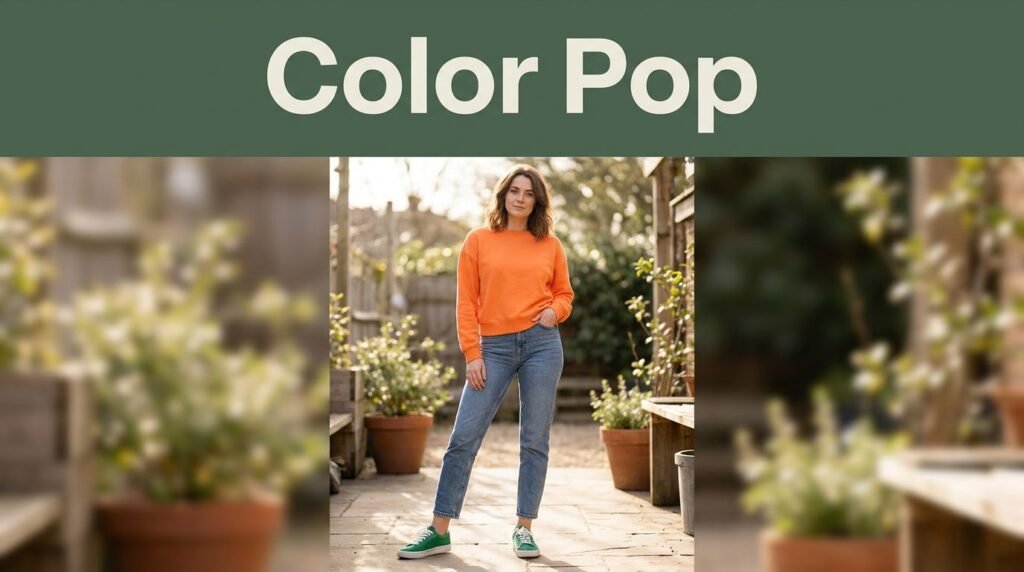
Weekend style gets stale fast. If your usual jeans, sneakers, and neutral tops feel flat, color can wake them up without making your outfit feel fussy.
The best bright casual outfits are simple. You don’t need a head-to-toe rainbow, and you don’t need a “fashion personality” to pull them off. You need one strong shade, an easy base, and a little trust in your own taste.
That shift starts with seeing color as part of daily life, not special-occasion clothing.
Why weekends are the easiest time to wear more color
Casual weekend events give you room to loosen up. Nobody expects formal polish at brunch, a farmer’s market, or a backyard cookout. Because the mood is lighter, bright clothes feel more natural there than they might in a strict office or a dressy dinner spot.
Color also changes how an outfit reads. A plain gray sweatshirt can feel routine. The same shape in tangerine or grass green feels awake. The item itself isn’t more complex, but the effect is stronger.
There is some logic behind that reaction. An overview of color psychology explains that people often connect warm shades with energy and cooler shades with calm. That doesn’t mean a yellow tee will fix your mood, but it helps explain why colorful clothing can feel more lively and expressive.
A piece on colorful clothes and mood makes a useful point, too. The lift often comes from how you feel in what you’re wearing. In other words, the power isn’t only in the shade. It’s also in the choice.
So, if you’ve been wearing safe neutrals every weekend, bright attire can act like a reset. It asks a little more from you, but it gives something back. You look more awake. You often feel less hidden. People who already love color know this well, and hesitant dressers usually notice it the first time they try a strong piece with a relaxed outfit.
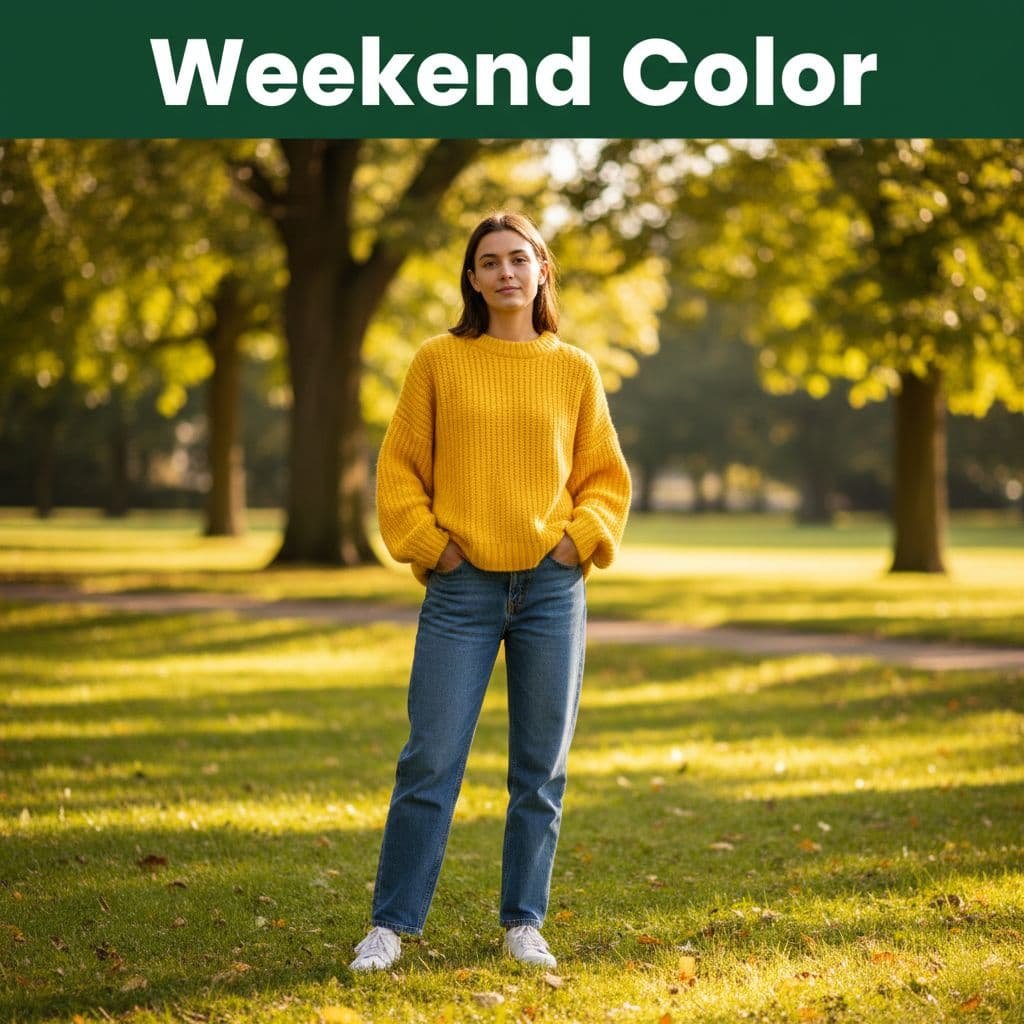
That is why weekends are such good practice. The stakes are low, the settings are friendly, and one bright sweater or cobalt overshirt can change the whole tone of your day.
Bright casual outfits that work for real weekend plans
Most people don’t struggle with color itself. They struggle with scale. A vivid item feels easy in theory, then “too much” once it’s on. The fix is simple: keep the shape casual, and keep the rest of the outfit steady.
A bright piece works best when the supporting items stay calm. Blue jeans, white denim, olive pants, tan sandals, and clean sneakers do a lot of heavy lifting. They let the colorful item stand out without turning the whole look into a costume.
This quick table shows how that balance works across common weekend plans.
| Event | Bright piece | Easy base | Why it works |
|---|---|---|---|
| Brunch with friends | Lemon cardigan | Straight-leg jeans, white tee | Friendly, polished, relaxed |
| Farmer’s market | Cobalt overshirt | Black shorts, trainers | Practical, but still fresh |
| Backyard cookout | Coral dress or bright polo | Denim jacket, flat sandals | Cheerful and easy outdoors |
| Coffee date or gallery stop | Magenta pants | Breton tee, loafers | Feels intentional, not stiff |
The pattern matters more than the exact shade. Start with one hero piece, then build around it. A bright green knit with faded jeans looks easy because the contrast feels familiar. Hot pink trousers with a soft gray sweatshirt work for the same reason.
You can also match the event to the color mood. Outdoor plans usually welcome warmer, sunnier tones. A picnic or street fair suits orange, yellow, tomato red, or bright turquoise. If the event feels quieter, try cobalt, orchid, jade, or a deep, bright berry. Those shades still pop, but they don’t shout.
Pay attention to the fabric, too. Weekend clothing looks better when the color sits on relaxed materials. Cotton poplin, washed denim, linen blends, soft knits, and canvas all keep the look grounded. The same bright tone in satin or stiff tailoring can feel less casual.
When people say color is “hard,” they often mean the outfit feels overbuilt. Strip it back. One bright layer, one neutral base, one clean shoe. That’s usually enough.
Low-pressure ways to start wearing color without feeling overdone
If you like colorful looks on other people but freeze when it’s your turn, don’t start with the loudest option in the room. The easiest path is smaller, closer to what you already wear.
A bright accessory is the softest entry point. A coral bag, red sneakers, cobalt cap, or green earrings can change the mood of neutral clothing in seconds. Because the item is small, it doesn’t feel risky. Yet the outfit still reads as fresh and intentional.
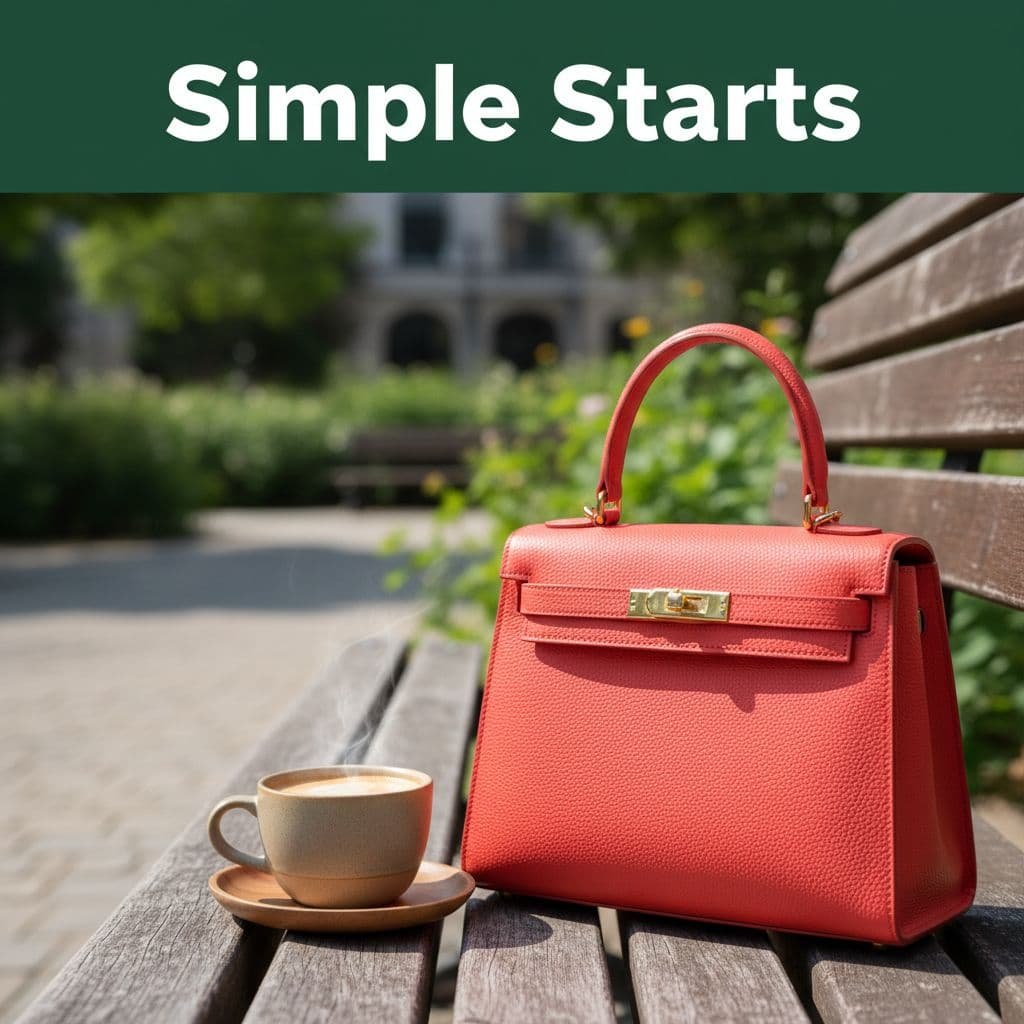
Another easy move is to swap a standard basic for the same item in a stronger shade. Pick the T-shirt you always wear, but buy it in marigold. Choose your usual sweatshirt, but in bright teal. The shape already feels like home, so the color doesn’t feel like a costume.
You can also keep bright colors away from your face at first. Try cherry sneakers, lilac pants, or a bold tote before you commit to a neon knit or vivid jacket. Many reluctant dressers find that lower-body color feels easier because it draws less immediate attention.
The goal isn’t to trick yourself. It’s to build proof. Once you wear one bright piece to a relaxed event and realize nobody is staring, your range opens up. That is how dressing with confidence usually grows, not through one giant leap, but through repeated wins.
Liberty’s piece on the psychology of color in clothing lands on a similar idea. A lot of the feel-good effect comes from personal meaning and memory. So choose shades that already appeal to you. If orange feels playful or blue feels calm, start there.
Color gets easier when it connects to your own taste. Copying someone else’s palette rarely feels right for long.
Dressing with confidence when bright shades feel “too visible.”
The hard part usually happens at the mirror. You put on the bright top, step back, and suddenly feel more exposed. That reaction is common. You’re not seeing a bad outfit. You’re seeing a break in habit.
Confidence has less to do with personality than people think. Most of the time, it comes from fit and balance. When bright clothes fit well, and the rest of the outfit stays simple, you look settled. When the fit is off, the color gets blamed for a problem caused by the tailoring.
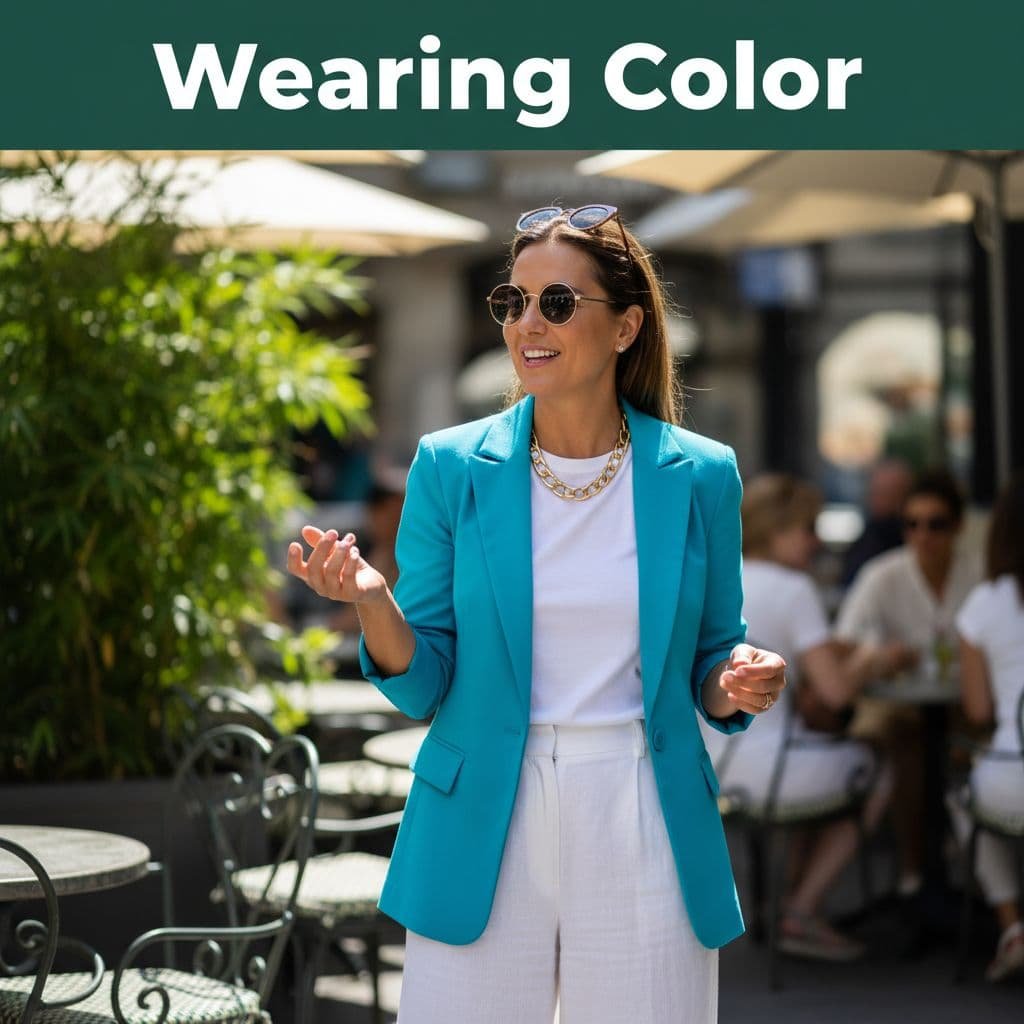
If a bold shade feels awkward, simplify the outfit and let the color do the work.
That one rule fixes a lot. Skip extra trends when the shade is already strong. A bright knit with straight jeans and clean sneakers feels calm. A bright knit with tricky cutouts, stacked jewelry, and loud prints can feel busy fast.
Another common mistake is choosing a color you admire but don’t enjoy wearing. Some people love acid green in photos but feel better in tomato red or cobalt blue. Your best weekend attire isn’t the boldest thing available. It’s the bold thing you’ll wear again without second-guessing.
It also helps to match color intensity to the event. For a laid-back coffee run, a bright sweatshirt or bag is plenty. For a birthday brunch or an outdoor party, stronger color blocking can make sense. Context matters, and your comfort level matters too.
Most importantly, don’t wait to feel fearless. Dressing with confidence often comes after the outfit goes on, not before. Once you stop treating bright shades like a test, they start feeling like normal clothing, which is what they are.
The easiest weekend style upgrade is color
Weekend dressing doesn’t need more rules. It needs more ease, and color is one of the easiest ways to get there. One bright piece can wake up familiar basics, make casual attire feel more personal, and help you enjoy getting dressed again.
Start small if you want. Wear the coral bag, the yellow knit, or the cobalt overshirt to your next low-key plan. After that, bright colors stop feeling brave and start feeling natural.
This post may contain affiliate links. If you make a purchase through these links, I may earn a small commission at no extra cost to you.